Where has January gone?! With such a fast‑paced start to the year, we’re hoping this momentum carries us through the rest of 2026.
LOM steps into the year with an exciting pipeline ahead, driven by a diverse mix of heritage, retrofit, workplace, and mixed‑use projects. Major commissions, key project completions, and the progression of new schemes reflect the practice’s continued focus on intelligent reuse, design quality, and the importance of collaboration. As market pressures, regulatory change, and emerging technologies reshape the industry, LOM is committed to delivering inclusive, lasting value for people and communities.
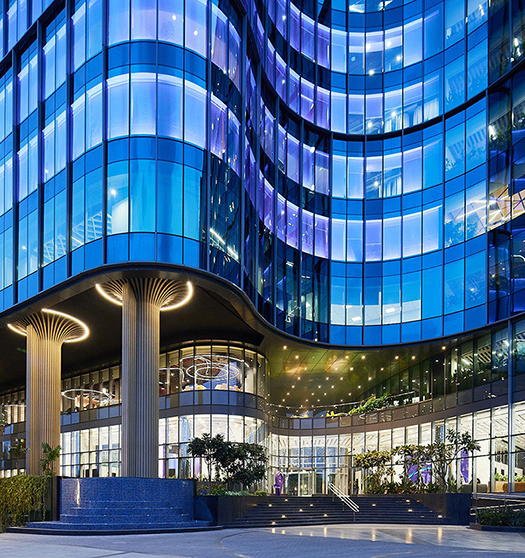
Our upcoming projects this year include the Bank of England, working closely with heritage specialists Purcell; continuing to develop the mixed‑use Landmark tower in Malta toward tender; and seeing some long time projects reach completion, including the Tigne Point residential scheme in Malta and a very exciting HQ fit-out in Mayfair. LOM hopes to advance its heritage portfolio with several projects, including Hampton Waterworks, a revitalisation of a disused listed waterworks building through a sensitive, residential‑led transformation. Alongside these heritage adaptive‑reuse projects, several retrofit schemes that gained planning approval last year are set to progress in 2026, further strengthening its expertise in retrofit, building repositioning, and decarbonising existing buildings. Director, Ben Taylor comments: “As demand grows for smarter, lower‑carbon reuse of assets, we are well positioned to navigate complex regulatory, technical, and commercial challenges”.
LOM is excited by the chance to rethink existing buildings. Director, Simon Bird, looks at how people are at the heart of LOM’s work, shaping both its purpose and approach, “Collaboration remains central to our approach. We continually look for opportunities to build effective teams that deliver real value to clients and their end users.” LOM will continue to develop individual personality and identity within projects. Cross‑sector influences, particularly hospitality, will help shape amenities across all building types. Sustainability, wellbeing, and human experience will remain embedded in LOM’s work, while emerging models and approaches will further blur the boundaries between sectors.
“Collaboration remains central to our approach”
Market and Regulations
“Architecture and design in 2026 will continue to be shaped by regulatory change, market viability, and shifting patterns of occupation.” Predicts, Director, Ben Taylor. In 2026, the complexity of gateway submission remains a challenge, though it is thought processes should streamline as the industry adapts. With 2027 EPC targets approaching, decarbonising existing office stock will be a major focus for LOM, supported by the gradual return to city‑centre workplaces. Viability pressures, especially in regional markets, will persist, though easing interest rates and material costs may help restart stalled schemes. The sector is also reassessing the extent of the ongoing pursuit in improving the quality of in workplace design. The challenge for LOM, and the wider industry, will be to respond to commercial pressures without eroding design quality.
Technology & AI
LOM consider the rise of AI as another tool used to improve work and efficiency. LOM spent 2025 working with clients to test how AI could support an improved design process through briefing & scoping, visualisation & communication, design development and practice management tasks such as file organisation and administration. Last year LOM undertook some benchmarking of AI against its own team in certain tasks, and the humans won! Through this testing LOM is gaining a clearer understanding of its current strengths and limitations but also understanding what it is that humans do really well. “Although still emerging within architecture, AI is advancing quickly, and as we move into 2026, we plan to use it where it adds the most value, enhancing creativity and design while streamlining processes.” explains, Director, Simon Marett. As a business, LOM will continue to explore the potential of AI and how it can most effectively support architectural and design practice.
“We are using AI where it adds the most value, enhancing creativity and design while streamlining processes”
Sustainable design
Sustainability in 2026 will centre on the intelligent re‑use and decarbonisation of existing buildings, with adaptive re‑use and retrofit offering the greatest impact on both operational and embodied carbon. LOM is prioritising the transformation of existing assets, recognising the environmental, commercial, and experiential value of retaining building fabric. As a business, it is also embedding embodied‑carbon assessment tools into workflows to guide early design decisions and give clients clearer metrics. The aim is to make sustainability practical, measurable, and integral to design quality, balancing environmental performance with usability, longevity, and character. Director, Simon Bird, highlights how LOM will translate its findings into its evolving project work. “A continued focus on embodied carbon remains essential, and our Sustainability Working Group will keep advancing ways to measure project impacts. As retention and re‑use become more sophisticated and practical, we will further embed these principles into our design process.”
Evolving approaches to design
Director, Richard Hutchinson, explains how he thinks architecture and interior design will evolve. “I expect richer, more interesting projects will emerge as sector lines continue to blur, allowing uses to generate synergies and diversity within large developments and individual projects. Our approach, working as a non-sector-based team of designers positions us to embrace this positive shift with dexterity and creativity.” 2025 saw many businesses driving a return to the office. As organisations now reassess their space needs, LOM is keen to see how workplace design evolves, with the increasing demand for office space. LOM see the growing focus on the experience of the user being central to design, with careful attention being given to the employee, resident or guest experience that will be built around high-quality design and well considered facilities.
“At LOM, we have always designed with people at the centre”
Designing for people and communities
LOM plays an active role in shaping communities by designing workplaces that contribute positively to their wider context and prioritise people at every scale. LOM is particularly interested in how its projects can diversify use, especially at ground level, to create more open, accessible, and socially active environments. On projects such as ‘Project Landmark’, this approach has led to an open and permeable site with new public routes, enhanced public realm and landscaping, and active ground-floor retail and F+B uses that support local businesses. Looking ahead, LOM continues to explore how office buildings can offer broader community value, such as flexible social or event spaces outside core working hours, promoting more sustainable and inclusive use of the buildings we create. A community focus and the social value within projects is becoming increasingly essential across schemes and to clients. “At LOM, we have always designed with people at the centre. This is becoming even more important across workplace, education, and hospitality, where the experience and the sense of belonging is becoming increasingly fundamental as a differentiator and attractor to create richer and more valuable experiences for employees, students and guests’ comments Director, Simon Bird.
Inclusivity
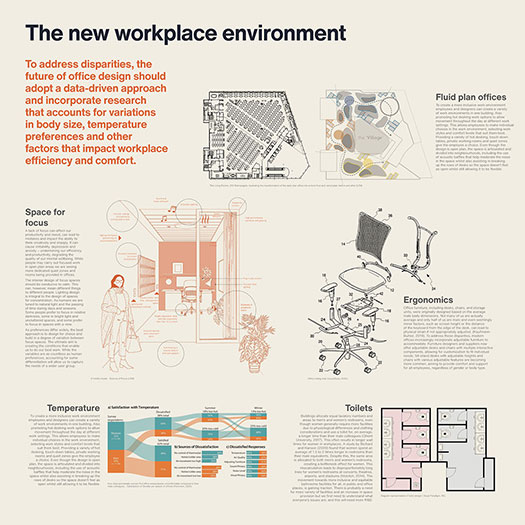
“We are committed to promoting inclusivity by embedding best-practice accessibility into every stage of design.” Says Director, John Avery. “The practice plays an active role in shaping accessibility standards, including leading the development of inclusive design guidance for a major global technology client, helping to inform consistent, high-quality outcomes across multiple projects.” Across its portfolio, LOM prioritises access‑for‑all principles as a fundamental aspect of good design. In 2026, this includes responding to new Part T requirements, particularly around WC provision, to ensure projects offer improved, equitable access and a more inclusive user experience. LOM believes the architecture profession would benefit from greater diversity, and as a business it remains committed to driving this change. This year, LOM aims to celebrate its people, strengthen its outreach and advocacy, and deepen its work with City College London to help widen access to the profession.
“We are committed to promoting inclusivity by embedding best-practice accessibility into every stage of design”