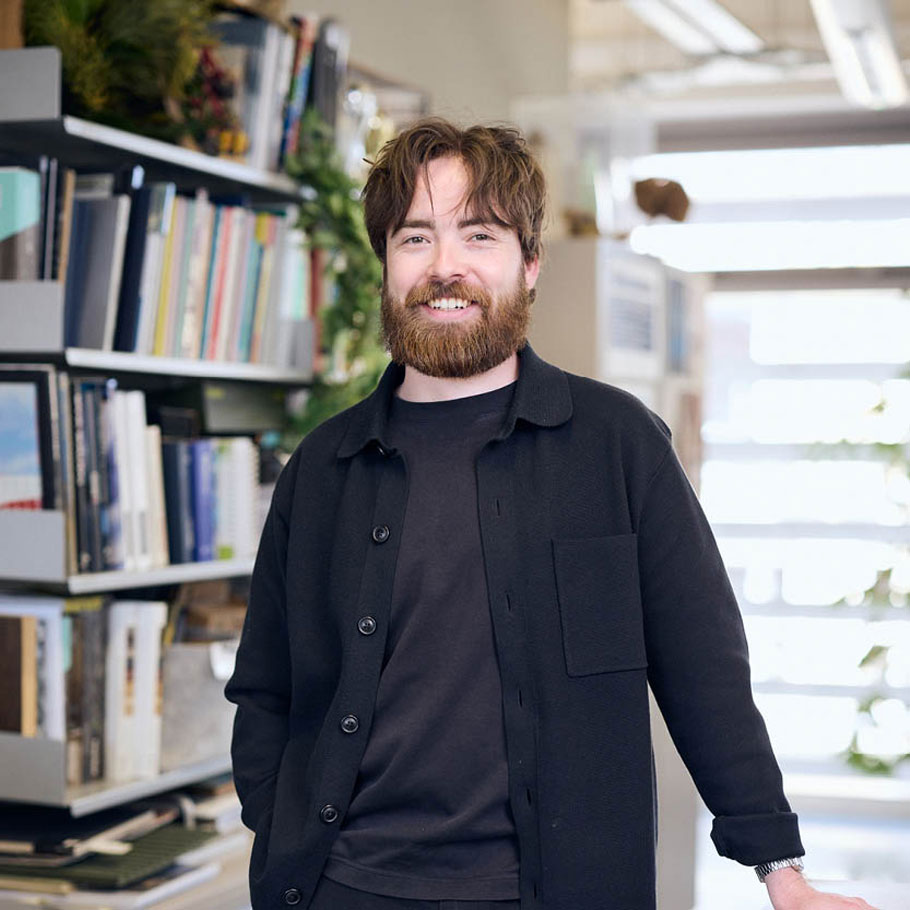
Architectural Designer, Conor Riordan reflects on his international journey to architecture, exploring how experiences in Dubai, Belfast, and Belgium has shaped his design philosophy. He also shares the value of cross-sector collaboration and why it’s key to creating exceptional game-changing design.
How do you see your generation influencing the future of architecture?
As a question, it’s quite a tough one because I think we kind of have our work cut out for us. There are so many challenges: global warming, sustainability, densification, and environmental challenges. My generation came in at the beginning of all these topics, and at that time, it was a newish thing. So, I think there is a sensitivity and definitely a culture of trying to work toward these common goals. I would just say the challenge is this, working in practice, your attention is very divided. As an architect your scope zooms out from small detailing to whole urban environments and social issues. Its hard to hold focus on the whole picture at once.
Talk to me about the importance of educating the younger generation of architects.
Architecture is a subject that covers sociology, history, art and technology. What I felt was missing from my education were “reality-facing” modules on how practice actually works, dealing with structural engineers, MEP, or developers. I personally believe the apprenticeship programs, where you work in practice and do university half-and-half, are a fantastic idea. Earlier industry engagement would help students realise if the career is truly for them. Architecture has a high dropout rate, I think because the idealism of university doesn’t always translate to the reality of practice.
Could you explain which designers particularly fascinate you and why?
I always love this question; it is very tough to answer and often dependent on mood and what you are currently appreciating. It’s very much I’m always in love with the last person I danced with kind of answer.
From Belgium, I find the work of Bovenbouw Architectuur incredible. The studio has a very sensitive approach to context; they source from the environment and are playful with historical motifs. They renovated three building from the 19th century in Antwerp, with shops on the street level and apartments above. The buildings where in a bad state and they took each apartment as it was instead of trying to make them all consistent. This approach of ‘unity in diversity’ was very playful and led to some incredible work.
One of long time favourites is David Chipperfield. I’m really captivated by the sensitivity and quiet monumentality of his work.
What building/s have had a lasting impact on you and why?
Antoni Gaudí’s Sagrada Família is incredible. His imagination and dedication to his craft has lead to some of the worlds most unique buildings.
A bit of a classic response but the Barbican Estate is incredible. What stands out to me about both Gaudí and the Barbican is the incredible attention to craft. Those projects weren’t strictly economically driven. For example, the concrete in the Barbican was cast in place and then textured by hand. You wouldn’t be able to do that nowadays because the cost is prohibitive, it is about those extra flourishes and the power of beauty that makes a city rich.
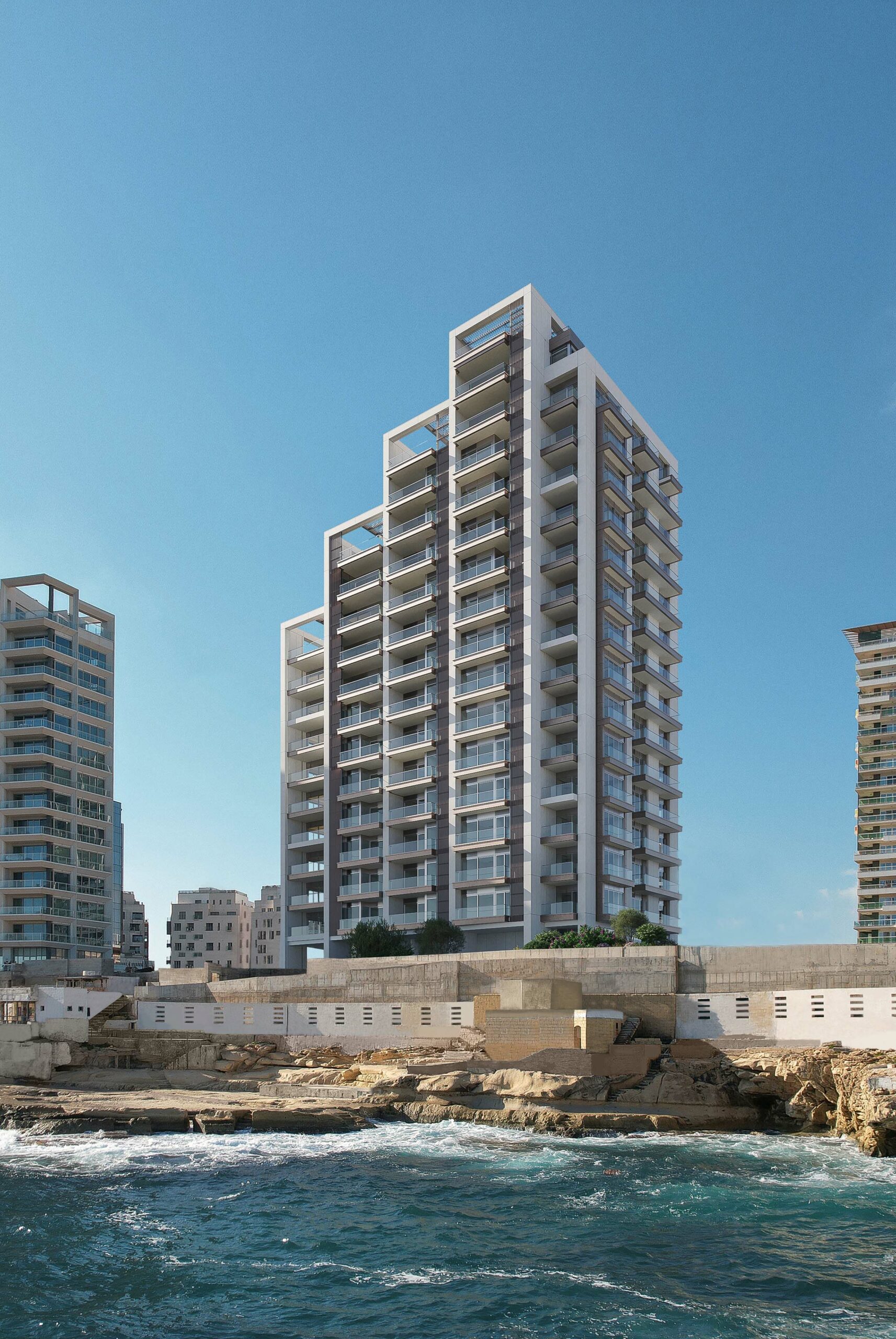
In my own work I would have to say LOM’s current mixed use high-rise tower in Malta. This was my first skyscraper and I was never confronted before with the complexity and scale of engineering required to make buildings like this function. Having to blend mixed spatial programs while trying to maintain a cohesive aesthetic language was really a challenge.
You’ve worked on projects like the Mixed Use Tower in Malta. What are the benefits of cross-sector working?
I touched on in my previous answer the complexity of these sort projects require so much multidisciplinary collaboration. Getting to fully engage with structural and MEP consultants has really broadened my knowledge and appreciation of these adjacent fields.
At the end of the day getting a building like this designed is a team sport it makes you a better architect being able to better understand the need of your team.
With your international journey, from growing up in Dubai to studying in Belfast and working in Belgium. How has this shaped your approach to architecture?
Growing up in Dubai, I saw first-hand how a city can be completely transformed by pragmatic, visionary people. It’s a young, impressive, and undeniably ‘bling’ place, but the speed of its development has left out a lot of the subtler historical fabric and layering as we see in older cities around the world. When I moved to Belfast for my Bachelor’s degree, I realised how much I valued that sense of social and historical layering and accumulated texture. I think as Architects we are creatures of context, and having more contextual layering in older cities allows us an associative toolkit to create successful architecture.
How you move through a city really affects placemaking and the publics perception of architecture. Something I really struggled with in Dubai was the lack of walkability. The city felt more disconnected as it was designed more around the car. Walking through a city lets you immerse yourself in its character, follow its streets at your own pace, and absorb the small details that gives a place its meaning. Something I had discovered after living in Antwerp and then London.
I’ve been really enjoying my past two years since I moved to London. It can be quite an intimidating city to get to grips with, but if you put in the effort to understand it I don’t think there is another city like it in terms of the payoff. Obviously for a city of its size and age the planning environment leaves a lot to be desired but the quality and vision the work being done in the city is inspiring. For instance I’ve been really appreciating the new wave of architecture called ‘gentleism’. I find the idea that new developments should try not to dominate their context but to modestly improve them to be very captivating. This interest might be driven by my life’s constantly changing context, but its given me an appreciation of meeting a place where it at and trying to improve things respectfully.
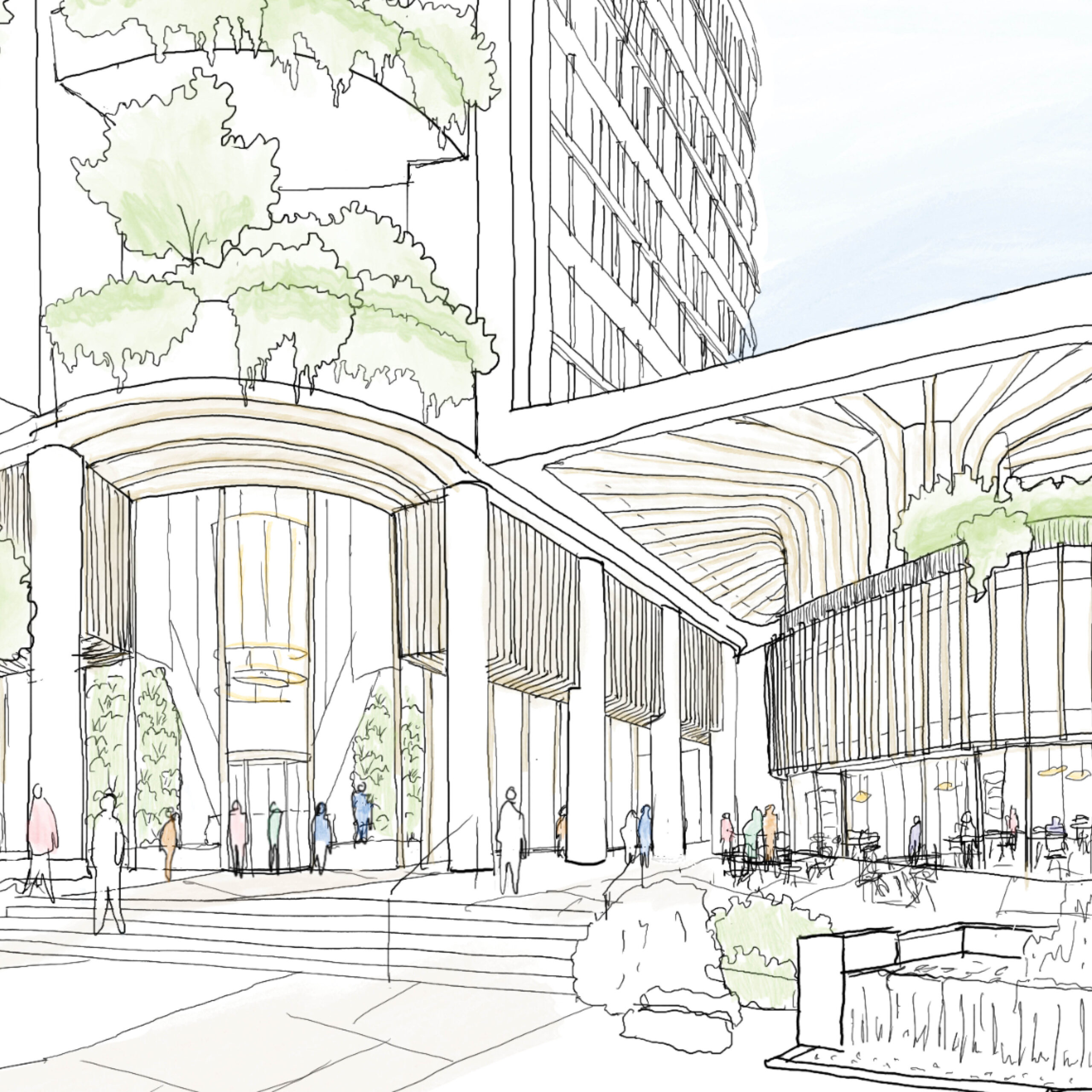
What have you learned while working at LOM?
LOM is a much bigger office than the one I worked at in Belgium. I’ve also enjoyed engaging in the wider eco system around the business. For example, I wrote an article for the NLA which reminded me how much I enjoyed that side of things.
Coming here has also been a change in sector. My background is mainly residential, so I haven’t had much engagement with workplace design. I’ve done a few test sets for various workplace clients, and it involves a different set of principles. I’m really looking forward to the opportunities to develop those skills.
Most people spend more of their time in the office, so you have a big impact, it’s really important to be able to engage with that.
You’ve organised many board game evenings at LOM… what’s your secret to a great game night?!
It’s just about engagement and people having fun; you have to pick a game that everyone can get into. I have a competitive side and am a bit of a boardgame nerd so I have to remember to tone it down a bit. It’s just about fostering and strengthening the invisible social bonds in the office, if you can keep your cool with colleagues through a game of monopoly then working through a stressful deadline with them is nothing.